Agent-Based Artificial Intelligence for Intelligent Claims Resolution

Introduction
The insurance industry is undergoing a major transformation as artificial intelligence becomes increasingly integrated into claims management. Claims processing traditionally involves multiple stages, including claim registration, document collection, policy verification, damage assessment, fraud investigation, communication with customers, and settlement. These activities often require significant manual effort and coordination between policyholders, claims handlers, surveyors, service providers, and insurers. As claim volumes increase, conventional approaches can lead to delays, operational costs, inconsistent decisions, and poor customer experiences.
Agent-Based Artificial Intelligence (AI) offers a new approach to addressing these challenges. Unlike conventional AI applications that typically perform a specific task after receiving an instruction, AI agents can perceive information, reason about objectives, make decisions within defined boundaries, use enterprise tools, and execute multiple steps as part of a workflow. In claims management, agent-based AI can coordinate different activities and support intelligent, faster, and more adaptive claims resolution.
Understanding Agent-Based AI
Agent-based AI refers to AI systems designed to operate as autonomous or semi-autonomous agents within a defined environment. An agent can receive information, analyze its context, determine an appropriate action, interact with software systems, and evaluate the result.
In insurance claims, an AI agent could receive a newly submitted claim and perform a sequence of activities. It may analyze the claim description, retrieve relevant policy information, identify required documents, examine supporting evidence, check for inconsistencies, communicate with the policyholder, and prepare the claim for human or automated settlement.
The important characteristic is coordination. Instead of using isolated AI tools for document extraction, classification, communication, and fraud detection, agent-based systems can coordinate these capabilities as part of a broader claims-resolution process.
Intelligent Claims Intake
The claims journey begins when a policyholder reports an incident. Traditional claims intake may require customers to complete lengthy forms and provide supporting documentation manually.
An AI claims agent can simplify this process by interacting with customers through digital channels. It can ask relevant questions based on the type of incident and identify information that is still missing. For example, after receiving an automobile accident notification, the agent may request accident details, photographs, vehicle information, location data, and relevant documents.
The agent can organize the collected information into a structured claim record and initiate downstream processing. This reduces repetitive data-entry activities and provides customers with immediate guidance.
Automated Policy Verification
Before a claim can be resolved, the insurer must determine whether the reported incident is covered by the applicable policy. This requires examining policy terms, coverage limits, exclusions, deductibles, endorsements, and claim conditions.
An AI agent can retrieve the relevant policy information and analyze the reported event against the applicable coverage provisions. Rather than simply returning a keyword match, the agent can identify relevant clauses and present a structured explanation to the claims handler.
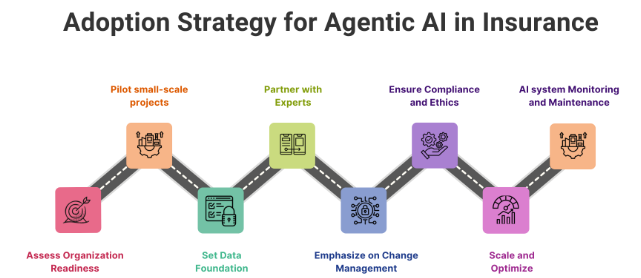
For complex cases, the system can flag uncertainty and route the claim to an experienced professional instead of making an unsupported automated decision.
Document and Evidence Analysis
Insurance claims frequently involve large collections of documents. These may include claim forms, invoices, medical records, repair estimates, police reports, photographs, inspection reports, and correspondence.
Agent-based AI can coordinate document-processing capabilities to extract relevant information and organize evidence. A document-analysis agent can classify incoming files, extract important fields, identify missing documents, and summarize lengthy records.
For example, when processing a property claim, the system may analyze an inspection report, repair quotation, photographs, and policy information. It can bring these sources together to create a consolidated claims summary for further review.
Damage Assessment
Visual information plays an increasingly important role in claims processing. In automobile and property insurance, photographs and videos can provide evidence of physical damage.
EQ1:Claim Processing Objective

AI agents can coordinate computer-vision models with claims workflows to identify visible damage and estimate relevant characteristics. The resulting assessment can be compared with repair estimates and policy information.
For straightforward cases, this may support accelerated processing. For complex or ambiguous cases, the agent can identify the need for a physical inspection or specialist assessment.
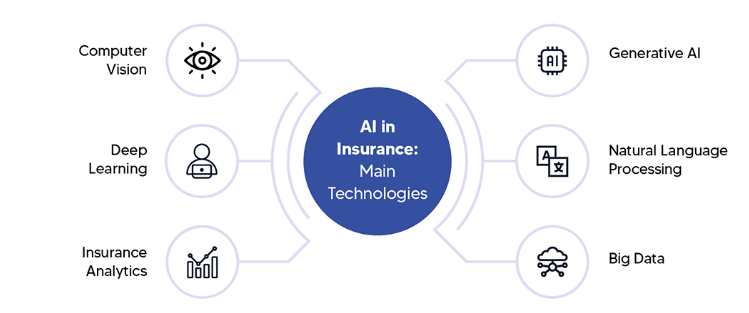
The objective is not necessarily to eliminate human expertise but to ensure that routine cases receive efficient processing while complex cases receive appropriate attention.
Fraud Detection
Fraud is a significant concern in insurance claims management. Suspicious claims may involve inconsistent information, unusual claim patterns, duplicated documents, exaggerated losses, or relationships between seemingly unrelated claims.
Agent-based AI can support fraud investigation by coordinating information from multiple sources. A fraud-analysis agent can examine claim information, compare supporting documents, identify inconsistencies, and generate an investigation summary.
Importantly, a fraud indicator should be treated as a signal for investigation rather than automatic proof of fraudulent behavior. Human investigators can review the evidence and determine the appropriate course of action.
Intelligent Decision Support
Claims resolution often requires multiple decisions. An AI agent can help organize the evidence and present relevant information to claims professionals.
For example, the agent can provide a summary containing the reported incident, policy coverage, supporting evidence, missing information, detected inconsistencies, estimated loss, and recommended next procedural step.
This allows claims handlers to spend less time searching through documents and more time evaluating cases that require professional judgment.
Customer Communication
Communication is an important component of the claims experience. Customers often want to know whether their claim has been received, whether additional documentation is required, and what happens next.
AI agents can provide automated communication throughout the claims lifecycle. They can notify customers when documents are missing, explain the next stage of processing, provide status updates, and answer routine questions.
Because the agent can access the current claims workflow, communications can be more context-aware than generic chatbot responses.
Human representatives can remain available for sensitive or complex conversations, ensuring that automation does not eliminate appropriate human interaction.
Multi-Agent Claims Architecture
A sophisticated insurance claims platform can employ multiple specialized agents. A claims-intake agent can collect initial information, while a document agent analyzes submitted files. A policy agent can verify coverage, a fraud agent can identify anomalies, and a communication agent can interact with customers.
A coordination agent can manage the overall workflow and determine which specialized agent should act next.
EQ2:AI Agent State Representation

This architecture creates a collaborative AI environment in which individual agents have defined responsibilities. Such specialization can improve system organization and make it easier to monitor and govern different activities.
Benefits of Agent-Based Claims Resolution
Agent-based AI can provide several operational benefits. Automation can reduce the time required to process routine claims and decrease repetitive administrative work. Intelligent document processing can reduce manual data entry, while automated communication can improve responsiveness.
Another important advantage is scalability. During periods of unusually high claim volumes, such as after severe weather events, AI agents can help insurers manage large numbers of cases simultaneously.
Agent-based systems can also improve consistency by applying defined workflows and business rules systematically. Employees can receive structured information instead of manually gathering evidence from multiple systems.
Challenges and Governance
Despite its potential, agent-based AI introduces significant challenges. Autonomous systems must operate within carefully defined boundaries. Incorrect reasoning, incomplete information, or inappropriate tool usage could produce undesirable outcomes.
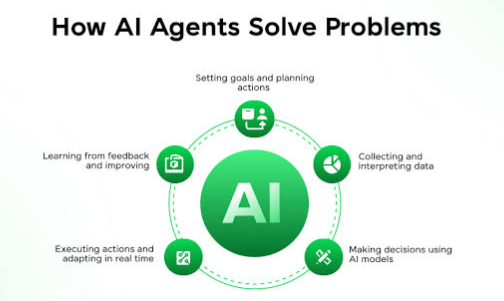
Data privacy and security are also critical because claims can contain sensitive personal, financial, medical, and property information. Strong access controls, encryption, monitoring, and data-governance mechanisms are necessary.
Explainability is particularly important when AI contributes to consequential insurance decisions. Organizations should maintain records of relevant inputs, actions, system outputs, and human interventions.
Human oversight should remain an important component of the architecture. High-value, disputed, complex, or sensitive claims may require human approval even when AI handles earlier stages of processing.
Future Outlook
The future of intelligent claims resolution is likely to involve increasingly sophisticated agentic systems capable of coordinating multiple AI capabilities and enterprise applications. Agents may interact with claims management platforms, policy databases, document repositories, customer-service systems, inspection platforms, and analytics tools.
Advances in multimodal AI could allow agents to simultaneously interpret text, photographs, tables, audio, and video. This could create a more comprehensive understanding of individual claims.
However, successful adoption will depend not only on AI capabilities but also on governance, process redesign, security, regulatory compliance, and organizational readiness.
Conclusion
Agent-Based Artificial Intelligence represents an important evolution in insurance claims management. By combining reasoning, information retrieval, document analysis, workflow orchestration, fraud detection, customer communication, and decision support, AI agents can transform claims processing from a sequence of manually coordinated tasks into a more intelligent and adaptive process.
The greatest value is likely to come from combining AI automation with human expertise. Routine claims can be processed more efficiently, while complex cases can be escalated to experienced professionals. With appropriate governance, transparency, security, and human oversight, agent-based AI can contribute to faster claims resolution, improved operational efficiency, and a more responsive insurance experience.